How Really Challenging The Kilimanjaro Summiting Is?
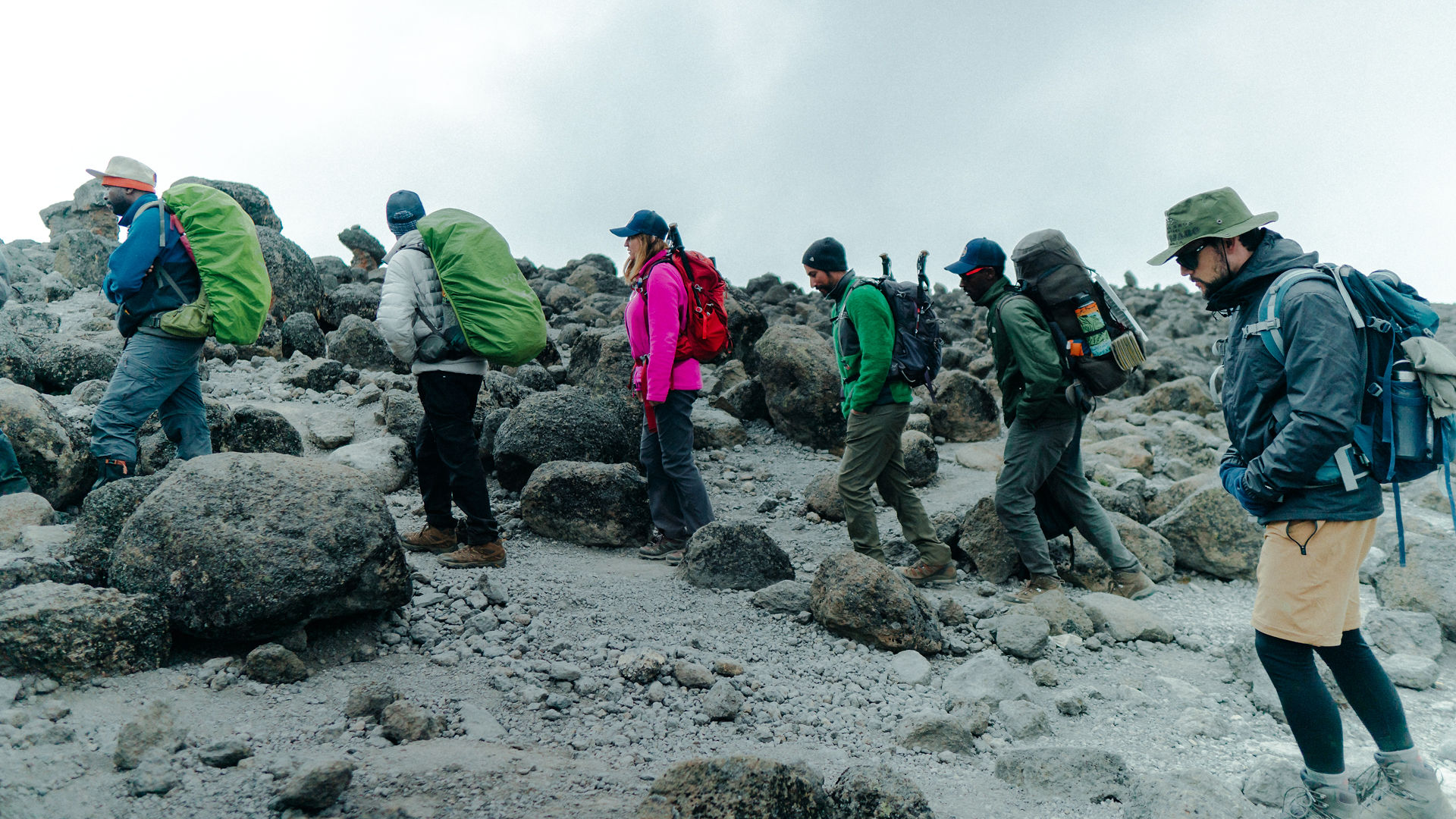
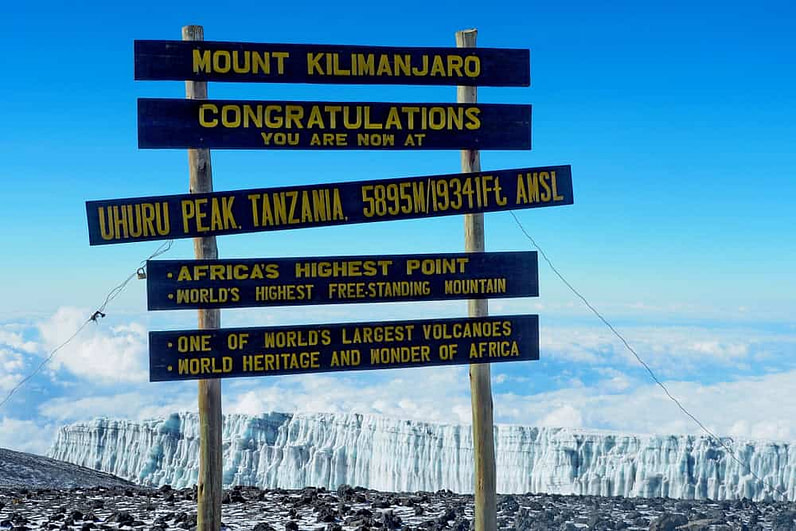
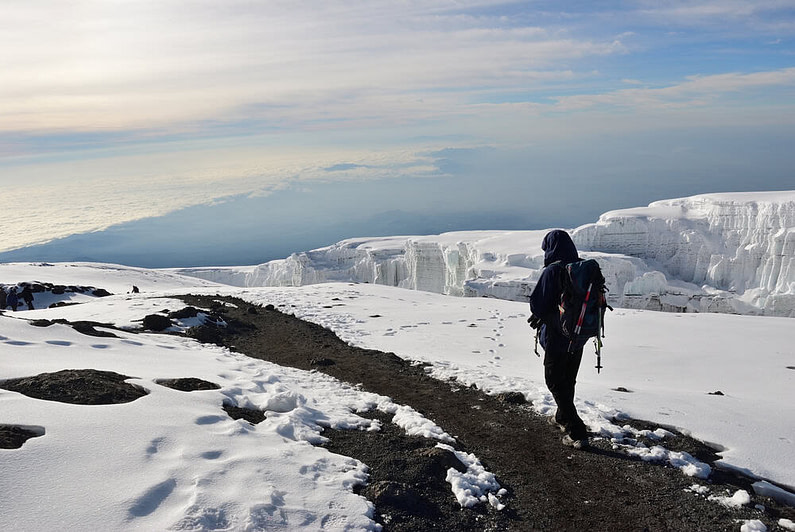
In the wind, the cold and the snow, climbers reach the limits of physical endurance. Pitched on the crest of the mountain, the path looks down into the crater and leads up to the frozen rooftop of a sun-baked continent 5,895 metres above the sea level. Climbers must be accompained by a guide certified by The Kilimanjaro National Park. Hikers are advised to hire porters to carry group equipment and personal belongings. This will increase their chances of making it to the top. For the Marangu route, a maximum of 50 persons per day has been prescribed. You are strongly advised to book well in advance and to pay a deposit to the National Park.
Interesting Facts About Kilimanjaro
The Origin Of The Name Kilimanjaro Is Not Certain
European explorers had adopted the name by 1860 and reported that “Kilimanjaro” was the mountain’s Swahili name. But according to the 1907 edition of The Nuttall Encyclopædia, the name of the mountain was “Kilima-Njaro,” comprised of the Swahili word “Kilima” meaning “mountain” and the Chagga word “Njaro” meaning “whiteness.”
German missionary Johann Ludwig Krapf wrote in his Missionary Labours (1860), “The Swahili of the coast call the snow-mountain Kilimanjaro, “mountain of greatness.” It may also mean “mountain of caravans” (kilima – mountain; jaro caravans), a landmark for caravans seen everywhere from afar, but the inhabitants of Jagga call it Kibo, `snow.”
Another possibility is that Kilimanjaro is the European pronunciation of a KiChagga phrase meaning “we failed to climb it.”
It Is Trekked By People From All Walks Of Life

Technically, the easiest to climb of the world’s Seven Summits is Kilimanjaro.
Mount Kilimanjaro is the easiest and most undemanding to climb all the Summits. It is considered beginner-friendly, with intermediate as well as difficult treks, too. What’s great is that climbers don’t even need any special training, technical skills, special gears or even previous trekking experience to reach the top.
According to Guinness World Records, the oldest to ever reach Kilimanjaro’s summit was 86 years old and the youngest was 6. Naturally, it has lured many people, including families, all over the world. No wonder it’s called “every man’s Everest.”
Being an easy mountain to trek, Mount Kilimanjaro is never boring. In fact, thrill and challenges and awe-inspiring scenery await trekkers every breathing moment.
Mount Kilimanjaro features 7 routes, each with different trekking grades. This makes it more convenient for trekkers to choose a route that’s best for them, considering their experience, ability and number of days available. Here are the different routes to climb Kilimanjaro:
- Marangu (5-6 days; Difficulty level: Low) – “The only one with hut accommodations”
- Machame (6-8 days; Difficulty level: Medium) – “The most popular”
- Lemosho (7-8 days; Difficulty level: Medium) – “The most scenic”
- Shira (7-8 days; Difficulty level: Medium) – “The one with the highest starting point”
- Rongai (6-7 days; Difficulty level: Low) – “The easiest”
- Northern Circuit (9-10 days; Difficulty level: High) – “The newest and longest”
- Umbwe (5-6 days; Difficulty level: High) – “The shortest, steepest, hardest”
Existing Of Supportive Trekking Infrastructure
The infrastructure around the mountain is superb. Roads and trails are well-marked, ground transportation is good, gears for rent are of great quality and best of all, Mount Kilimanjaro is clean (as opposed to Everest which is filled with trash). Park Rangers, as well as guides, porters and the rest of their teams, have really done a good job in maintaining the cleanliness as well as the wild nature of the mountain.
It Is A World On Its Own
Did you know that while the entire United States enjoy 7 climatic zones, Mount Kilimanjaro enjoys 5? Looking into the journey beyond the magnificent snowy summit, Mount Kilimanjaro guarantees an experience that is out of this world. Like walking from the Equator to the North Pole in just a span of days, the scenic changes in vegetation and climate creates that feeling of “traversing through different worlds within just a few hours.”
Kilimanjaro was formed from volcanic activity. However, the mountain once had three volcanic cones – Kibo, Shira and Mawenzi..
- Kibo (19,340’/5,895m)
- Mawenzi (16,893’/5,149m)
- Shira (13,000’/3,962m)
Kibo is the tallest cone and also the central cone. This is where Kilimanjaro’s summit lies. It was formed 460,000 years ago.
Mawenzi is a craggy peak that ranks as the third highest peak in Africa, after Kibo and Mount Kenya (12,549’/3825m). You will have good views of Mawenzi on the Rongai and Northern Circuit routes.
Shira is no longer a peak. It is estimated to have been about 16,000 feet high before it collapsed, creating the Shira Plateau on the western side of the mountain. The Machame, Lemosho and Shira routes trek across this feature.
Here are Kilimanjaro’s 5 climatic zones:
- Cultivation: Farmlands, small villages, coffee and fruit plantations
- Rainforest: Most wildlife can be found here
- Heather-Moorland: Shrubs and unique flora are everywhere
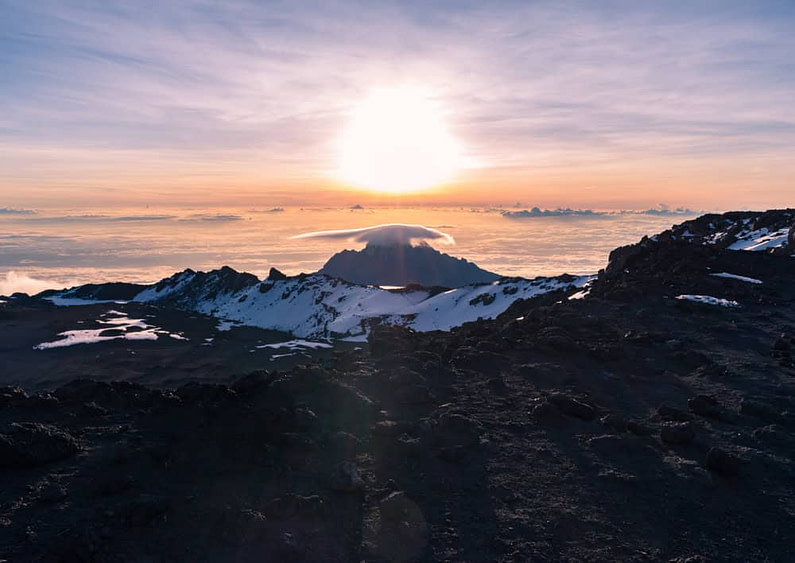
- Alpine Desert: Barren and unique landscapes featuring volcanic rocks in varied shapes and sizes, and also extreme temperatures
- Glacier Summit: An arctic zone
It Guarentees Awesome Photographing
Mount Kilimanjaro is a paradise for photographers and nature lovers. It offers breathtaking sceneries, amazing flora, and fascinating animals that whether you’re aiming to capture wildlife, plants or beautiful vistas, Mount Kilimanjaro has all of them – no filter needed.
It Supports Its Local Economy
Thanks to Kili’s 40,000 climbers each year, its local economy is thriving and is, in fact, generating about $20 million a year. As a result, guides, porters, cooks, food producers, travel agencies or operators, hotel staff, local merchants, etc. provide local jobs in a region that sadly remains one of the poorest in the world.
With its phenomenal views, out-of-this-world trekking experience that feels like walking from the Equator to the North Pole, the year-round snow-covered mountain surrounded by dry savannah and incredible life forms, Mount Kilimanjaro is deemed the “Greatest Natural Wonder of the World.”
It really is no surprise to pick Mount Kilimanjaro as your next adventure destination out of the other 1,000,809 mountains in the world. Its sheer beauty and amazing trekking opportunities make it an infallible holiday destination for anyone who’s seeking for great adventures! Visit Kilimanjaro Trekking to view varying itineraries.
The Journey To Summit Is Like Going From Equator To Antarctica
While climbing Kilimanjaro, trekkers will experience five distinct ecological zones on their way to the top. These include:
- Bushland/Cultivated Zone: 2,600′-6,000’/800m-1,800m
- Rainforest Zone: 6,000′-9,200’/1,800m-2,800m
- Heath/Moorland Zone: 9,200′-13,200’/2,800m-4,000m
- Alpine Desert Zone: 13,200′-16,500’/4,000m-5,000m
- Arctic Zone:16,500’+/5,000m+
Weather conditions near the base of the mountain tend to be tropical to semi-temperate and are relatively stable all year round. The lower plains are hot and dry. As one heads away from the bushland towards the rainforest, conditions become increasingly warm and humid.
Each zone gets colder and drier as the elevation increases. Plant and animal life also disappear with the rise in altitude through the heath and alpine desert zones.
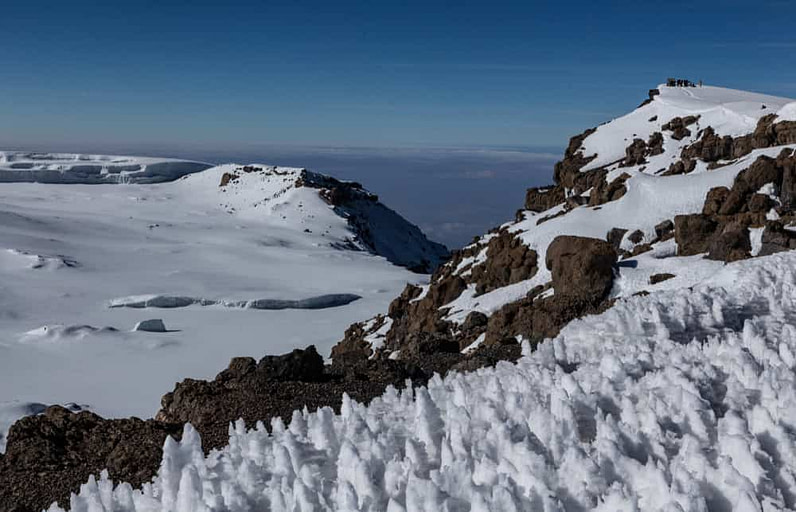
The summit is in the arctic zone, characterized by ice and rock. At this altitude, categorized as “extreme”, there can be no permanent human habitation as the body is in a state of deterioration (short exposures are OK).