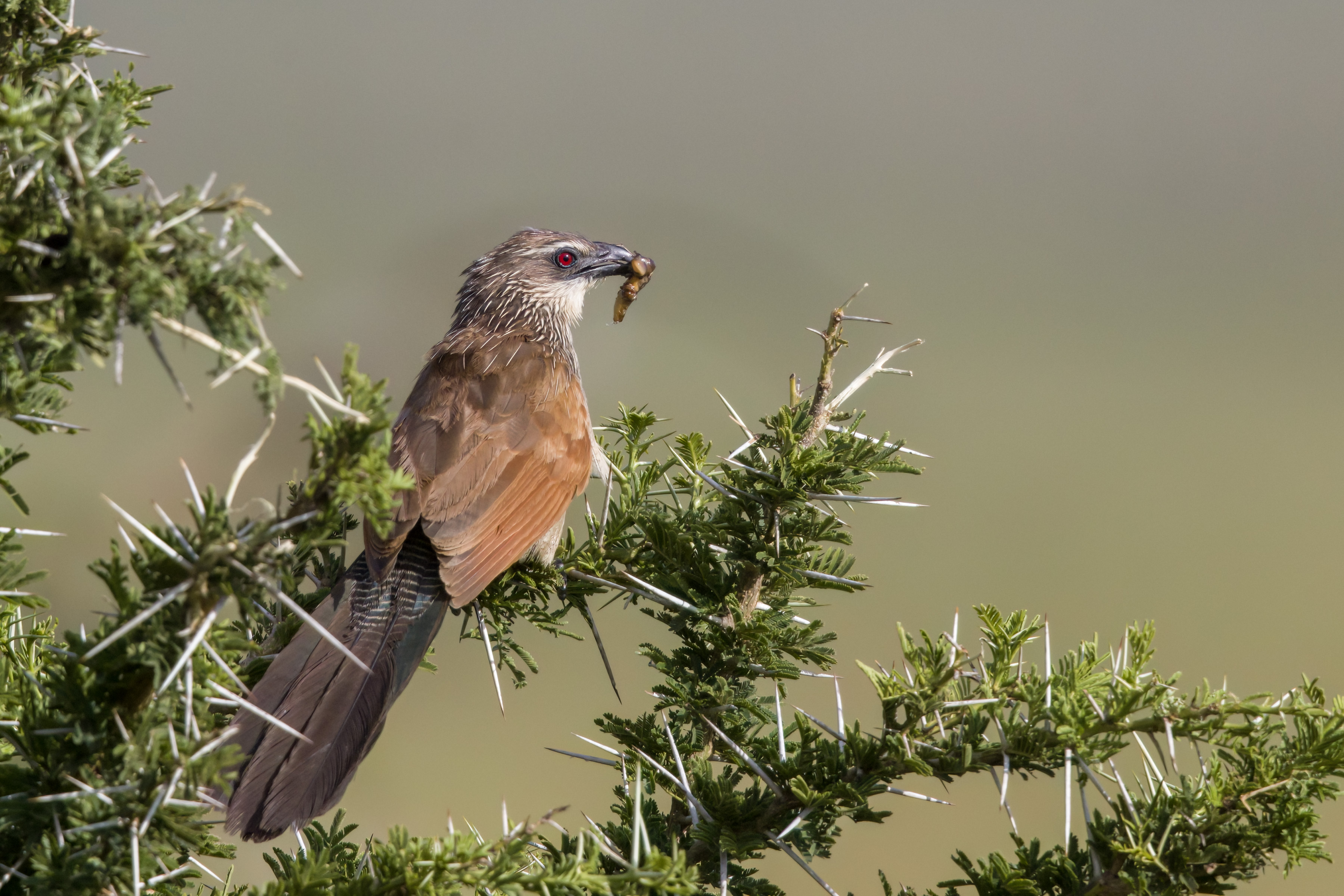
Tanzania's Birds Paradise
Ruaha, Tanzania’s largest national park, is an undiscovered gem for birders seeking remote and exclusive solitude safaris in Ruaha. With over 570 species, including rare and endemic birds, Ruaha’s rugged landscapes and riverine forests provide a dramatic backdrop for bird watching. There are always plenty of wading birds in the shallows of the Great Ruaha River, and birds like the ostriches are a stuning sight throughout the year. All the talk of Ruaha marking transition zone between East and Southern Africa takes on special meaning with the birds: you will want to carry with you the field guides from both regions to help with identification. In addition to all the species that are commonly seen from other Tanzanian parks, there is a good chance of spotting species like the crested barbet, whose persistent trilling is a characteristic sound of the southern bush. And to make things even more interesting, Ruaha also hosts several endemic species that are otherwise restricted to Central Tanzania.

Highlights for Ruaha Birdwatching
Ruaha National Park is Tanzania’s least accessible parks and poorly visted and as result it is totally untouched and remains one of the most exciting game reserves (almost as large as the Serengeti) in Tanzania. We do include Ruaha National park on many of our off track safaris.
Ruaha is exciting and regarded as a birdwatcher’s paradise as there are 450 species of bird that are not found in northern Tanzania and as the river runs through spectacular gorges and majestic trees it is specially appealing to photographers. The new Ruaha Redbilled( Tanzania Redbilled ) Hornbill, another one of the Tanzanian endemics is localized in Ruaha.

If you're a serious birdwatcher, you'll wanto to visit the park sometimes between November (when hundreds of thousands of migratory birds arrive in the park and its surroundings from Europe and North Africa to overwinter under the warmer African sun) and March (when they start to leave). By March and April, rains can turn many trails to quagmires and some camps close, so January or February can be a good (if really hot) choice. Apart from the Kilombero Valley, a world-class wetland beloved by birdwatchers, it's a step sideways from the usual wildlife safari fare!
Planning Your Bird Watching Safari: Tips and Essentials
To make the most of your birding safaris in Tanzania, consider these practical tips:
- Choose Specialized Camps: Opt for lodges like Tarangire Treetops or Jabali Ridge, which offer expert guides and tailored birding itineraries. These camps are among the best bird watching lodges in Tarangire and Ruaha for their proximity to prime birding sites.
- Pack the Right Gear: Bring binoculars (8×42 or 10×42 recommended), a field guide (e.g., Birds of East Africa by Stevenson and Fanshawe), and a camera with a telephoto lens. A notebook or app for logging sightings is also useful.
- Best Time to Go: The wet season (November to May) is ideal for migratory birds and lush landscapes, while the dry season (June to October) offers better visibility for resident species.
- Health and Safety: Ensure you’re up-to-date on vaccinations (e.g., yellow fever) and carry insect repellent to protect against mosquitoes in wetland areas. Check with your camp for specific health requirements.
- Book in Advance: Birding safaris, especially at specialized camps, can book up quickly during peak seasons. Reserve 3–6 months in advance for the best availability.
- Respect Wildlife: Follow your guide’s instructions to avoid disturbing birds, especially during nesting seasons. Use quiet observation techniques to maximize sightings.
