Tanzania offers wildlife experiences in customized styles that makes every safari unique itself.
Tanzania Wildlife Circuit
The Northern Circuit - NORTHERN TANZANIA
Serengeti National Park

The Serengeti National Park is a park in the Serengeti ecosystem in the Mara and Simiyu regions. The name "Serengeti" is an approximation of the word used by the Maasai to describe the area, Siringet, which means "the place where the land runs forever". The Serengeti gained more fame after the initial work of Bernhard Grzimek and his son Michael in the 1950's. Together, they produced the book and film Serengeti 'Serengeti Not Die', widely recognized as one of the most important early pieces of nature conservation documentary. The park is famous for its annual migration of over 1.5 million white-bearded wildebeests and 250,000 zebras.
The park covers 14,750 km2 of grassland plains, savanna, riverine forest and woodlands. The park lies in northwestern Tanzania, bordered to the north by the Kenyan border, where it is continuous with the Maasai Mara National Reserve. To the southeast of the park is the Ngorongoro Conservation Area, to the southwest lies Maswa Game Reserve, to the west are the Ikorongo and Grumeti Game Reserves, and to the northeast and east lies the Loliondo Game Control Area. Together, these areas form the larger Serengeti ecosystem.

The park is usually described as divided into three regions:
Serengeti plains: the almost treeless grassland of the south is the most emblematic scenery of the park. This is where the wildebeests breed, as they remain in the plains from December to May. Other hoofed animals - zebra, gazelle, impala, hartebest, topi, buffalo, and waterbuck - also occur in huge numbers during the wet season. "Kopjes" are granite formations, that are very common in the region, and they are great observation posts for predators, as well as a refuge for hydrax and pythons.
Western corridor: the black clay soil covers the savannah of this region. The Grumeti River and its gallery forests are home to Nile crocodiles, patas monkeys, hippopotamus, and martial eagles. The migration passes through here from May to July.
Northern Serengeti: the landscapes is dominated by open woodlands (predominantly Commiphora) and hills, ranging from Seronera in the south to the Mara River on the Kenyan border. Apart from the migratory wildebeest and zebras (which occur from July to August, and in November), this is the best place to find elephant, giraffe, and dik dik.

Ngorongoro Crater
The Ngorongoro Conservation Area (NCA) is a protected area and a World Heritage Site located 180km west of Arusha in the Crater Highlands area of Tanzania. The area is named after Ngorongoro Crater, a large volcanic caldera within the area. Ngorongoro was named by the Maasai as El-Nkoronkoro meaning "Gift of Life". This was because they were migrating from Central Africa for a permanent settlement which might explain why the Ngorongoro Conservation Area is mostly occupied by the Maasai.

Approximately 25,000 large animals, mostly ungulates, live in the crater. Large animals in the crater include the black rhinoceros,the local population of which declined from about 108 in 1964-1966 to between 11-14 in 1995, the African buffalo or Cape buffalo, and the hippopotamus. There also are many other ungulates: wildebeest, zebras, the common eland, and Grant's and Thompson's gazelles. Waterbucks occur mainly near Lerai Forest. There are no topis, oribis, or crocodiles. Impala are absent because the open woodland they prefer does not exist. Giraffe are also absent Cheetahs, East African wild dogs and leopards are rarely seen.
Arusha National Park

The closest national park to Arusha town - northern Tanzania's safari capital - Arusha National Park is a multifaceted jewel, often overlooked by visitors, despite offering the opportunity to explore a beguiling diversity of habitats within a few hours.
The entrance gate leads into shadowy montane forest inhabited by inquisitive blue monkeys and colourful turacos and trogons - the only place on the northern safari circuit where the acrobatic black & white colobus monkey is easily seen. In the midst of the forest stands the spectacular Ngurdoto Crater, whose steep, rocky walls enclose a wide marshy floor dotted with herds of buffalo and warthogs.
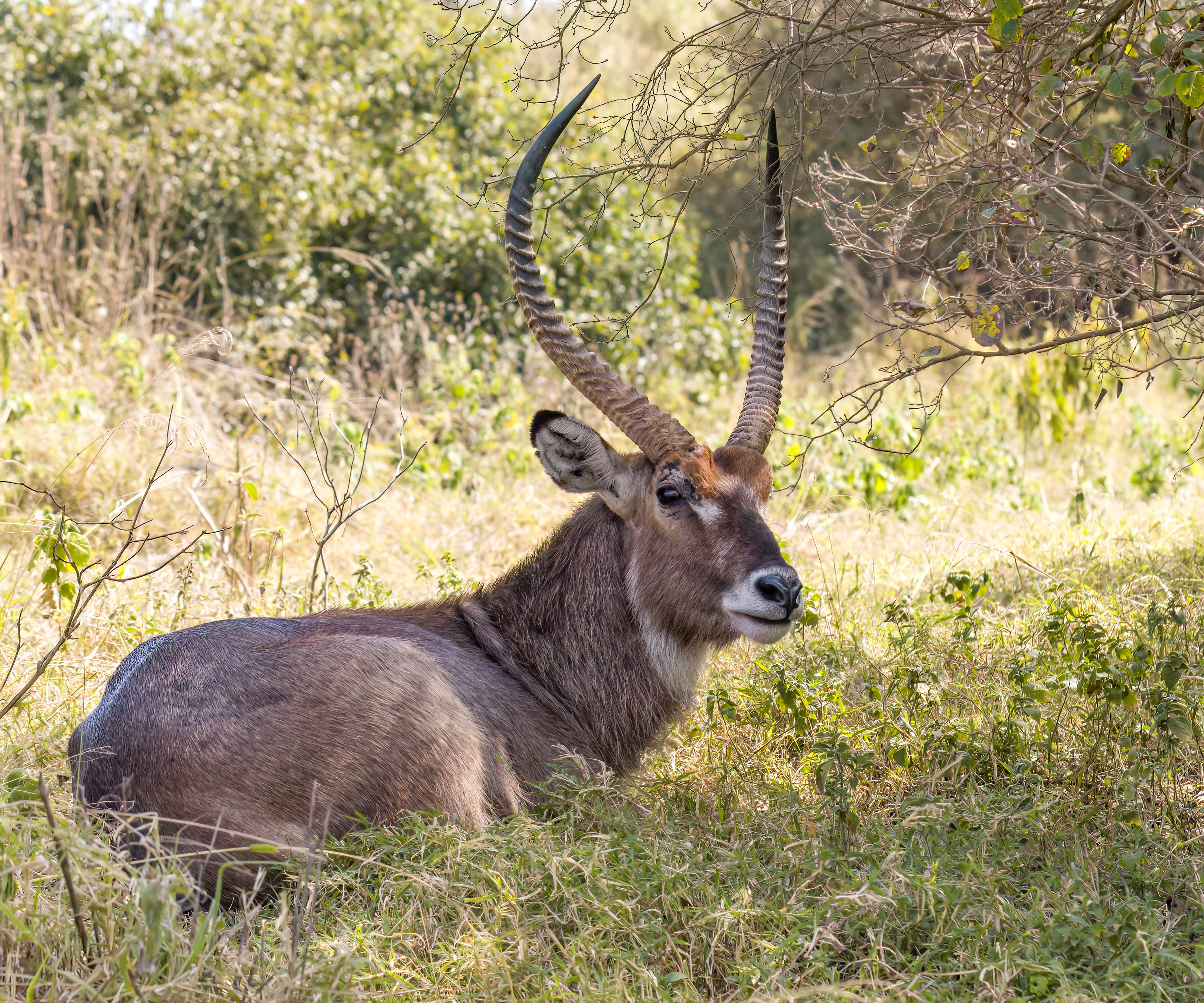
Further north, rolling grassy hills enclose the tranquil beauty of the Momella Lakes, each one a different hue of green or blue. Their shallows sometimes tinged pink with thousands of flamingos, the lakes support a rich selection of resident and migrant waterfowl, and shaggy waterbucks display their large lyre-shaped horns on the watery fringes. Girrafes glide across the grassy hills, between grazing zebra herds, while pairs of wide-eyed dik dik dart into scrubby bush like overgrown hares on spindly legs.
Although elephants are uncommon in Arusha National Park, and lions absent altogether, leopards and spotted hyenas may be seen slinking around in the early morning and late afternoon. It is also at dusk and dawn that the veil of cloud on the eastern horizon is most likely to clear, revealing the majestic snow-capped peaks of Kilimanjaro, only 50km away.
But it is Kilimanjaro's unassuming cousin, Mount Meru - the 5th highest in Africa at 4,566 m - that dominates the park's horizon. Its peaks and eastern foot slopes protected within the national park, Meru offers unparalleled views of its famous neighbour, while also forming a rewarding hiking destination in its own right.
Passing first through wooded savannah where buffalos and giraffes are frequently encountered, the ascent of Meru leads into forests aflame with red-hot pokers and dripping with Spanish moss, before reaching high open heath spiked with giant lobelias. Everlasting flowers cling to the alpine desert, as delicately-hoofed klipspringers mark the hike's progress. Astride the craggy summit, Kilimanjaro stands unveiled, blushing in the sunrise.
Lake Manyara National Park

Stretching for 50 km along the base of the rusty-gold 600 m high Rift Valley escarpment, Lake Manyara is a scenic gem, with a setting extolled by Ernest Hemingway as "the loveliest I had seen in Africa".
The compact game-viewing circuit through Manyara offers a virtual microcosm of the Tanzanian safari experience.
From the entrance gate, the road winds through an expanse of lush jungle-like groundwater forest where hundred-strong baboon troops lounge nonchalantly along the roadside, blue monkeys scamper nimbly between the ancient mahogany trees, dainty bushbuck tread warily through the shadows, and outsized forest hornbills honk cacophonously in the high canopy.
Contrasting with the intimacy of the forest is the grassy floodplain and its expansive views eastward, across the alkaline lake, to the jagged blue volcanic peaks that rise from the endless Maasai steppes.
Large buffalo, wildebeest and zebra herds congregate on these grassy plains, as do giraffes - some so dark in coloration that they appear to be black from a distance.
Inland of the floodplain, a narrow belt of acacia woodland is the favoured haunt of Manyara's legendary tree-climbing lions and impressively tusked elephants. Squadrons of banded mongoose dart between the acacias, while the diminutive Kirk's dik dik forages in their shade. Pairs of klipspringers are often seen silhouetted on the rocks above a field of searing hot springs that steams and bubbles adjacent to the lakeshore in the far south of the park.
Manyara provides the perfect introduction to Tanzania's birdlife. More than 400 species have been recorded, and even a first-time visitor to Africa might reasonably expect to observe 100 of these in one day. Highlights include thousands of pink-hued flamingos on their perpetual migration, as well as other large water birds such as pelicans, cormorants and storks.
Tarangire National Park

Tarangire National Park is the 6th largest national park in Tanzania; it is located in Manyara Region. The name of the park originates from the Tarangire River that crosses the park. The Tarangire River is the primary source of fresh water for wild animals in the Tarangire Ecosystem during the annual dry season. The Tarangire Ecosystem is defined by the long-distance migration of wildebeest and zebras. During the dry season, thousands of animals concentrate in Tarangire National Park from the surrounding wet-season dispersal and calving areas.
It covers an area of approximately 2,850 km2. The landscape is composed of granitic ridges, river valley, and swamps. Vegetation is a mix of acacia woodland, commiphora-combretum woodland, seasonally flooded grassland, and baobab trees.
The park is famous for its high density of elephants and baobab trees. Visitors to the park in the June to November dry season can expect to see large herds of thousands of zebras, wildebeest and buffalo. Other common resident animals include waterbuck, giraffe, dik dik, impala. eland, Grant's gazelle, vervet monkey, banded mongoose, and olive baboon. Predators in Tarangire include lion, leopard, cheetah, caracal, honey badger and African painted wild dog.
Home to more than 550 bird species, the park is a haven for bird enthusiasts.
EASTERN TANZANIA - Home to Mkomazi and Saadani National Parks
Mkomazi National Park

Set below the verdant slopes of the spectacular Usambara ad Pare Eastern Arc Mountain ranges and overseen by iconic snowcapped peak of Kilimanjaro, Mkomazi, a virgin breathtaking beauty exhibiting unique natural treasures and immense sense of space, adds to the fulfillment of the visitor's expectations. Visitors are now welcome to discover the treasures of this wedge of hilly semi-arid savannah, home to large herds of giraffe, eland, hartbeest, zebra, buffalo and elephant.
Mkomazi is also a vital refuge for two highly endangered species, the charismatic black rhino and sociable African painted wild dog, both of which were successfully reintroduced in the 1990's. Nomadic by nature, the African painted wild dog might be seen almost anywhere in the park, but black rhino are restricted to a fenced sanctuary, ensuring their safe keeping until they are relocated to other parks.
Mkomazi also supports several specialist species that are rare elsewhere in Tanzania; these include the spectacular fringe-eared oryx, with its long back-sweeping horns, and the handsome spiral-horned lesser kudu. Oddest of all is gerenuk, a gazelle distinguished by its hind legs stretching out for acacia leaves that other browsers cannot reach.
Saadani National Park

Saadani National Park is the only wildlife sanctuary in Tanzania bordering the Indian Ocean. Gazetted in 2005, it encompasses a well-preserved ecosystem including the former Mkwaja ranch area, the Wami River as well as the Zaraninge Forest.
Many villages are dotted around the boundaries of the park. Saadani village itself was once an important harbour town and slave-trading centre in East Africa. Nowadays it is a small Swahili village of about 800 inhabitants whose livelihood is mostly fishing.
Bird watchers will be treated to rare migratory birds that love the shore.
The coastal vegetation zones ranges from seashore full of palm trees to tidal mangrove forest that form a buffer between ocean and land, to the Wami River shore where the huge sycamore fig is found. Its semi-open woodlands closely resemble the Selous Game Reserve, while the vast grassy area close to the tourism office is named 'Serengeti Ngogo' (Small Serengeti) and lives up to the expectations.
Saadani National Parks is a 'one of a kind' paradise where beach life meets wilderness. This gives you not only the opportunity to plunge into the Indian Ocean straight after your safari,but also to be submerged in a unique display of both marine and mainland flora and fauna in a naturally fascinating setting.
SOUTHERN TANZANIA - the Southern Circuit
Nyerere National Park

Nyerere National Park, formerly part of the vast Selous Game Reserve, is one of Africa's largest and most pristine wildlife sanctuaries. Located in southern Tanzania, this park spans over 30,000 square kilometers, offering a truly remote and untouched safari experience far from the more frequented northern circuit.
Named after Tanzania's founding father, Julius Nyerere, the park is a UNESCO World Heritage Site known for its rich biodiversity and dramatic landscapes, including wide savannah plains, woodlands, wetlands, and the life-giving Rufiji River. The river is the heart of the park, creating a network of channels and oxbow lakes that attract an abundance of wildlife. Visitors can expect to see elephants, lions, leopards, buffaloes, and hippos, as well as one of the Africa's largest population of wild dogs. Nyerere is also a birdwatcher's paradise, with over 400 bird species recorded.
One of the highlights of a visit is the boat safari on the Rufiji River, offering a rare chance to see crocodiles, hippos, and birds up close from the water - an experience not commonly available in most national parks.
Offering game drives, walking safaris, and boat excursions, Nyerere National Park provides a diverse and intimate safari adventure, perfect for travelers seeking a quieter, more exclusive experience in the wild heart of Tanzania.
Ruaha National Park

Ruaha National Park is the largest national park in Tanzania. The addition of the Usangu Game Reserve and other important wetlands to the park in 2008 increased its size to about 20,226 km2, making it the largest park in Tanzania and East Africa.
The name of the park is derived from the Great Ruaha River, which flows along its southeastern margin and is the focus for game-viewing. The park can be reached by vehicle on a dirt road from Iringa and there are two airstrips - Msembe airstrip at Msembe (park headquarters), and Jongomeru Airstrip, near the Jongomeru Ranger Post.
Mikumi National Park

The Mikumi National Park near Morogoro, Tanzania, was established in 1964. It covers an area of 3230 km2 hence is the 5th largest in the country. The park is crossed by Tanzania's A-7 highway. The Mikumi is bordered to the south with the Selous Game Reserve, the two areas forming a unique ecosystem. Two other natural areas bordering the national park are the Udzungwa Mountains and Uluguru Mountains.
The landscape of Mikumi is often compared to that of the Serengeti. The road that crosses the park divides it into two areas with partially distinct environments. The area north-west is characterized by the alluvial plain of the river basin Mkata. The vegetation of this area consists of savannah dotted with acacia, baobab, tamarinds, and some rare palm. In this area, at the furthest from the road, there are spectacular rock formations of the mountains Rubeho and Uluguru. The southeast part of the park is less rich in wildlife, and not very accessible.
The fauna includes many species characteristic of the African savannah. According to local guides at Mikumi, chances of seeing a tree-climbing lion is larger than in Manyara (famous for being one of the few places where the lions exhibit this behaviour) The park contains a subspecies of girrafe, that biologists consider the link between the Maasai giraffe and the reticulated or Somali giraffe. Other animals in the park are elephants, zebras, impala, eland, kudu, black antelope, baboons, wildebeests and buffaloes. At about 5 km from the north of the park, there are two artificial pools inhabited by hippos. More than 400 different species of birds also inhabit the park.
Udzungwa Mountains National Park

Udzungwa Mountains National Park is a national park in Tanzania with a size of 1,900 km2. The habitats contained within the national park include tropical rainforest, mountain forest, miombo woodland, grassland and steppe. There is a vertical height range of 250-2,576 m (the peak of Lohomero), which incorporates the Udzungwa Mountains as part of the Eastern Arc Mountains. There are more than 400 bird species, 2500 plant species (25% of which are endemics) and 6 primate species. It has the second largest biodiversity of a national park in Africa.
Six primate species have been recorded, five of which are endemic. The Iringa red colobus and Sanje crested mangabey species was undetected by biologists prior to 1979.
Tourism in the Udzungwa Mountains national park revolves around hiking and trekking, as the park has no roads and is accessible only on foot. The hiking trails range in difficulty from the short one-hour Sonjo trek to the extremely challenging 6-day camping trek the Lumemo Trail. The most common walk is the Sanje Waterfalls trail which takes approximately four hours to complete and allows the visitor access to the stunning 170 m waterfall and includes swimming in the waterfall plunge pools as part of the activity.
WESTERN TANZANIA - The Western Circuit
Katavi National Park

Katavi National Park is a Tanzanian national park created in 1974 and is located in Katavi Region, Tanzania. It is a very remote park that is less frequently visited thatn other Tanzanian national parks. The park is approximately 4,471 km2, which makes it the 3rd largest national park in Tanzania. The park encompasses the Katuma River and the seasonal Lake Katavi and Lake Chada floodplains.
Wildlife features include large animal herds, particularly of Cape Buffaloes, zebras, wildebeest, giraffes, and elephants, plus along the Katuma river, crocodiles and hippopotami which upon annual dry season results in mud holes that can be packed with hundreds of hippos. Carnivorous animals that roam this park are cheetahs, wild dogs, hyenas, leopards, and lions. Katavi has fewer human visitors and jeeps conducting game drives than other Tanzania parks.
Gombe Stream National Park

Gombe Stream National Park is located in western Kigoma Region, 20 km north of Kigoma. Established in 1968, Gombe is the smallest national park in Tanzania, with only 53 km2 of forest running along the hills of the eastern shore of Lake Tanganyika. The terrain is distinguished by steep valleys, and the forest vegetation ranges from grassland to alpine bamboo to tropical rainforest. Accessible only by boat, the park is most famous as the location where Jane Goodall pioneered her behavioral research conducted on the chimpanzee populations. The Kasakela chimpanzee community, featured in several books and documentaries, lives in Gombe Stream National Park.
Gombe Stream's high levels of diversity make it an increasingly popular tourist destination. Besides chimpanzees, primates inhabiting Gombe Stream include beachcomber olive baboons, red colobus, red-tailed monkeys, blue monkeys, and vervet monkeys. Red-tailed monkeys and blue monkeys have also been known to hybridize in the area. The park is also home to over 200 bird species and bushpigs. There are also 11 species of snakes, and occasional hippopotami and leopards. Visitors to the park can trek into the forest to view the chimpanzees, as well as swim and snorkel in Lake Tanganyika, home to almost 100 kinds of colorful cichlid fish.
Mahale Mountains National Park

Mahale Mountains National Park lies on the shores of Lake Tanganyika. Named after the Mahale Mountains range that is within its borders, the park has several unusual characteristics. First, it is one of only two protected areas for chimpanzees in the country. (The other is nearby Gombe Stream National Park made famous by the researcher Jane Goodall.)
The chimpanzee population in Mahale Mountains National Park is the largest known and due to its size and remoteness, the chimpanzees flourish. It is also the only place where chimpanzees and lions co-exist. Another unsusual feature of the park is that it is one of the very few in Africa that must be experienced by foot. There are no roads or other infrastructure within the park boundaries, and the only way in and out of the park is via boat on the lake.